Ground improvement encompasses a suite of geotechnical engineering techniques designed to enhance the physical properties of soil and rock, making them suitable for construction. In Tulsa, this category is critical because the region's variable subsurface conditions often fail to meet the bearing capacity, settlement, and liquefaction resistance requirements of modern infrastructure. From modifying expansive clays to densifying loose alluvial deposits, these methods transform marginal land into reliable building ground, directly mitigating risks associated with foundation failure, excessive settlement, and slope instability. Without proper ground improvement, projects ranging from commercial developments to public works face significant long-term performance issues and inflated lifecycle costs.
Tulsa's geology presents a unique set of challenges that make ground improvement not just an option, but a necessity. The city sits at the intersection of the Cross Timbers region and the Arkansas River floodplain, characterized by a complex stratigraphy of Pennsylvanian-age shale and sandstone bedrock overlain by Pleistocene terrace deposits and Holocene alluvium. Near the Arkansas River and its tributaries, thick sequences of soft, normally consolidated silts and loose sands are common, which are susceptible to differential settlement and seismic-induced liquefaction. Further from the floodplain, residual soils derived from shale weathering often contain highly plastic, expansive clays that undergo significant volume changes with moisture fluctuation, a leading cause of damage to pavements and shallow foundations throughout the Tulsa metropolitan area.
Any ground improvement project in Tulsa must adhere to a hierarchy of codes and standards to ensure design efficacy and public safety. The International Building Code (IBC), as adopted by the City of Tulsa, serves as the primary regulatory framework, referencing the American Society of Civil Engineers' ASCE 7 for loads and the International Residential Code (IRC) for one- and two-family dwellings. Technical design and execution are governed by consensus standards from ASTM International, such as ASTM D1143 for deep foundation testing, and the Deep Foundations Institute (DFI) guidelines. Crucially, the geotechnical investigation, which forms the basis for any improvement design, must comply with Oklahoma state regulations for professional engineering practice, requiring sealed reports from a licensed Professional Engineer (PE) with demonstrable local experience.
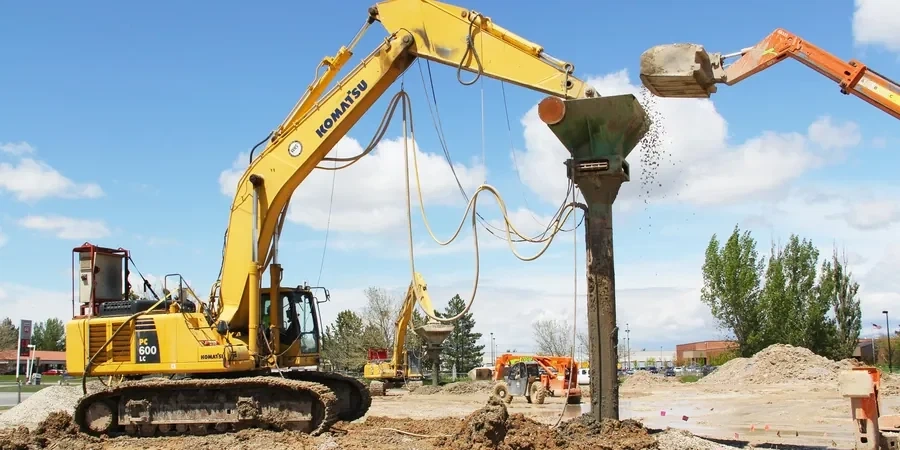
The application of ground improvement in Tulsa spans a wide spectrum of project types. Large commercial and industrial structures, such as the warehouses and distribution centers proliferating near the Tulsa Port of Catoosa, often require advanced solutions like stone column design to support heavy floor loads over compressible riverine soils without the time and cost of deep pile foundations. Mid-rise buildings and hospital expansions in the downtown core frequently rely on rigid inclusions or compaction grouting to control settlement on variable fill and prevent damage to adjacent historic structures. Infrastructure projects, including bridge approaches for the Oklahoma Department of Transportation (ODOT) and large-diameter water tanks for the City of Tulsa, utilize techniques like deep soil mixing and vibro-compaction to meet stringent total and differential settlement criteria and ensure seismic resilience in a region not immune to induced seismicity.
Available services
Common questions
What is ground improvement and when is it necessary instead of a standard foundation?
Ground improvement is the process of altering native soil properties to meet project requirements, becoming necessary when shallow foundations would cause excessive settlement or bearing capacity failure. In Tulsa, it's often triggered by the presence of loose alluvial sands along the Arkansas River, soft floodplain clays, or expansive residual soils that standard spread footings cannot safely accommodate without risking structural distress.
How do local soil conditions in Tulsa influence the selection of a ground improvement method?
Tulsa's diverse geology directly dictates the technical approach. Highly plastic, expansive clays common in upland areas require moisture conditioning or chemical stabilization, while loose, saturated sands in the river valley demand densification techniques like vibro-compaction or stone columns to mitigate liquefaction risk. The depth of competent shale bedrock also critically influences whether a mass treatment or deep foundation alternative is more economical.
What are the key regulatory standards governing ground improvement work in Oklahoma?
Projects must comply with the City of Tulsa's adopted International Building Code (IBC), which references ASCE 7 for loading and ASTM standards for material testing and method verification. A design must be based on a comprehensive geotechnical investigation performed under the responsible charge of an Oklahoma-licensed Professional Engineer, and any deep improvement elements like stone columns follow guidelines from the Deep Foundations Institute (DFI).
What are the environmental benefits of choosing ground improvement over traditional deep foundations?
Ground improvement often yields a lower carbon footprint than deep foundations like driven piling by using in-situ soils and reducing the need for concrete and steel. Techniques that densify or reinforce the ground without excavation minimize soil disposal to landfills and reduce truck traffic for material import and export, aligning with sustainable construction goals while mitigating disturbance to brownfield or sensitive sites common along the Tulsa riverfront.
Location and service area
We serve projects across Tulsa and its metropolitan area.