Geotechnical laboratory testing forms the cornerstone of reliable foundation design and earthwork construction across Tulsa. This category encompasses the full suite of physical and mechanical tests performed on soil and rock samples retrieved from the field, transforming raw subsurface data into the engineering parameters that drive safe and cost-effective projects. In the Tulsa metropolitan area, where expansive clay soils, loess deposits, and alluvial sands coexist within short distances, laboratory analysis is not merely a quality-control step—it is a critical investigative tool that reveals how the ground will behave under load, moisture changes, and seasonal fluctuations. A comprehensive laboratory program typically includes index property tests for classification, strength and compressibility assessments, and chemical analyses to evaluate potential sulfate attack on concrete. By linking field observations with controlled measurements, geotechnical laboratories provide the defensible numbers that structural engineers and contractors rely on to mitigate risk.
Tulsa's geology presents a distinctive set of challenges that make targeted laboratory testing essential. Much of the region is underlain by the Pennsylvanian-age shale and sandstone bedrock of the Cherokee Platform, but near-surface conditions are dominated by residual and transported soils derived from these rocks. Expansive clays of the Dennis and Oswego series are widespread, particularly in the rolling uplands east and south of downtown, and their shrink-swell potential can only be quantified through Atterberg limits and expansion index testing. Along the Arkansas River corridor and its tributaries, Holocene alluvium introduces loose, saturated sands that demand careful evaluation of liquefaction susceptibility and drainage characteristics. Loess-mantled terraces in portions of Tulsa County add another variable: moisture-sensitive silts prone to collapse upon wetting. Without laboratory-derived parameters such as grain-size distribution, moisture-density relationships, and shear strength, predictions of settlement or slope stability remain speculative at best.
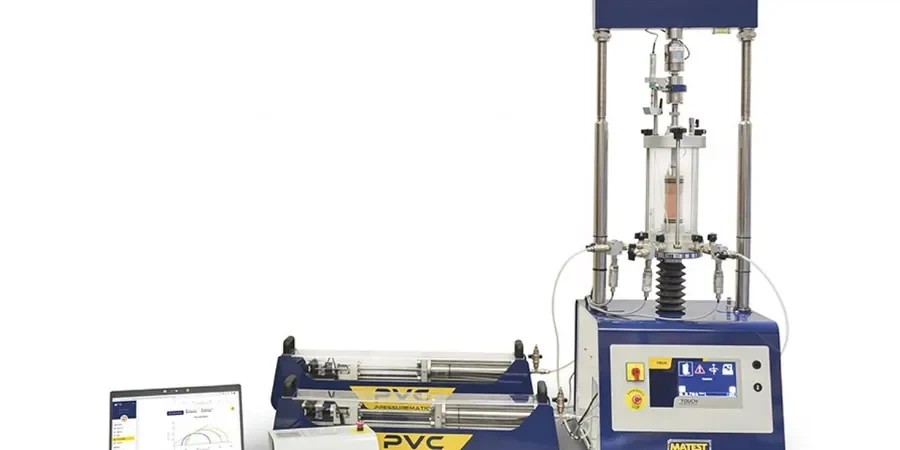
All laboratory testing conducted for Tulsa projects must adhere to nationally recognized standards, primarily those published by ASTM International. The most commonly invoked specifications include ASTM D422 for particle-size analysis, ASTM D4318 for Atterberg limits, ASTM D698 and D1557 for standard and modified Proctor compaction, and ASTM D2850 or D4767 for triaxial compression testing. For projects involving public works or federally funded infrastructure, AASHTO methods—such as T 88 for grain-size analysis and T 99 for compaction—often apply in parallel. These standards dictate everything from sample preparation and equipment calibration to reporting formats, ensuring that results are reproducible and legally defensible. Local building officials and geotechnical review boards in Tulsa expect laboratory reports to cite the specific ASTM or AASHTO designations followed, and deviations from these procedures can lead to permit delays or rejected submittals.
The types of projects that demand rigorous laboratory programs span the full spectrum of construction in Tulsa. Commercial developments in downtown and along the 71st Street corridor routinely require consolidation testing to estimate foundation settlement and triaxial test programs to define shear strength for deep excavations. Transportation infrastructure—including ODOT highway widenings and City of Tulsa street improvements—relies heavily on compaction testing and grain size analysis (sieve + hydrometer) to validate subgrade preparation and select borrow sources. Residential subdivisions in areas of known expansive soils benefit from expansion index and suction testing to guide foundation type selection. Energy-sector projects, from pipeline alignments to wind farm access roads, also depend on laboratory data for trench stability analyses and bedding design. Even smaller ventures such as retaining walls and stormwater detention basins draw on laboratory-measured friction angles and permeability coefficients to satisfy Tulsa's drainage and grading ordinances.
Common questions
Why is laboratory testing necessary for a Tulsa construction project when field tests like SPT are already performed?
Field tests such as the Standard Penetration Test provide index values that are useful for stratigraphic profiling but do not directly measure engineering properties like shear strength, compressibility, or expansion potential. Laboratory testing on undisturbed or representative samples yields calibrated parameters—friction angle, cohesion, consolidation coefficients—needed for foundation design. In Tulsa's variable soils, relying solely on field correlations without laboratory verification can lead to unconservative designs, especially in expansive clay zones where shrink-swell behavior governs performance.
Which ASTM standards are most commonly required for geotechnical laboratory work in Tulsa?
The most frequently cited ASTM standards for Tulsa projects include D422 (particle-size analysis), D4318 (Atterberg limits), D698 and D1557 (compaction), D2850 or D4767 (triaxial compression), D2435 (consolidation), and D4546 (expansion index). Projects involving public infrastructure often require parallel AASHTO methods such as T 88 and T 99. Local review agencies and geotechnical boards expect reports to explicitly reference these designations, and adherence to the specified sample preparation and testing procedures is essential for permit approval.
How does Tulsa's local geology influence the selection of laboratory tests?
Tulsa's subsurface is dominated by Pennsylvanian shale and sandstone bedrock overlain by expansive residual clays, alluvial sands along the Arkansas River, and collapse-prone loess on upland terraces. This diversity demands a tailored laboratory program: Atterberg limits and expansion index for expansive clays, grain-size distribution and hydrometer analysis for alluvial sands, and moisture-density relationships for loess. Understanding the local geology ensures the correct suite of tests is selected to address site-specific hazards like shrink-swell, liquefaction, and wetting-induced collapse.
What types of Tulsa projects typically require a comprehensive geotechnical laboratory program?
Virtually all engineered construction in Tulsa benefits from laboratory testing, but comprehensive programs are mandatory for commercial and institutional buildings, ODOT and City of Tulsa roadway projects, bridges, retaining walls exceeding four feet, and residential subdivisions in mapped expansive soil areas. Energy infrastructure such as pipelines and compressor stations, along with stormwater detention facilities, also require laboratory-derived parameters for stability and seepage analyses. Even smaller projects like foundation underpinning often need consolidation and strength data to validate the remediation design.
Location and service area
We serve projects across Tulsa and its metropolitan area.