Slope engineering in Tulsa encompasses the assessment, design, and stabilization of natural and constructed inclines to protect property and life from the risks of erosion, landslides, and soil failure. Given Tulsa's rolling terrain and extensive development along the Arkansas River and its tributaries, managing slope stability is not merely a regulatory requirement but a fundamental necessity for safe residential, commercial, and infrastructure projects. This category covers the full lifecycle of a slope, from initial geotechnical investigation and slope stability analysis to the implementation of structural solutions like retaining wall design.
Tulsa's geology presents specific challenges that make professional slope assessment critical. The region is underlain by a sequence of Pennsylvanian-age shale, sandstone, and limestone, often mantled by residual silty clays and colluvial deposits. These soils, particularly the fat clays, are highly susceptible to volumetric changes with moisture variation, leading to progressive weakening and shallow slope failures. Additionally, the city's well-documented history of flash flooding can rapidly saturate these materials, dramatically reducing their shear strength and triggering debris flows or rotational slides on steeper grades.
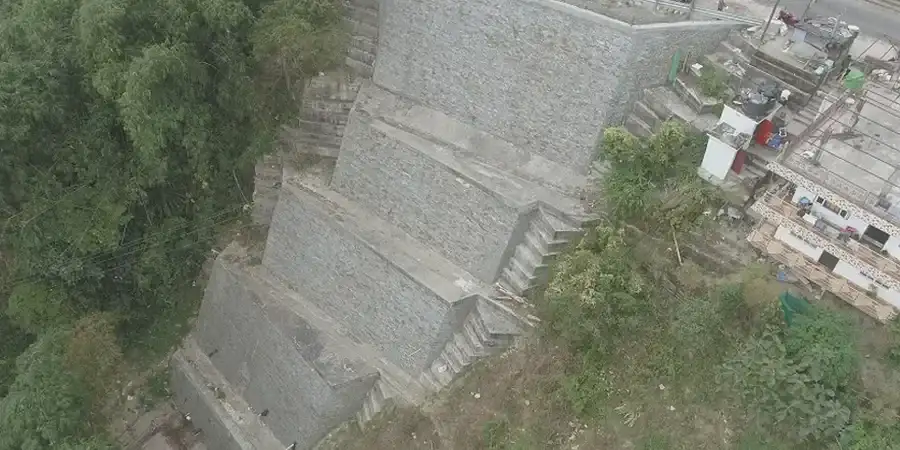
Any slope modification in Tulsa must adhere to national and local regulations, primarily grounded in the International Building Code (IBC) as adopted by the City of Tulsa. Geotechnical investigations must follow the standards set by the American Society of Civil Engineers (ASCE) and the Oklahoma State Board of Licensure for Professional Engineers and Land Surveyors. Key design parameters, such as minimum factors of safety for global stability (typically 1.5 for static conditions and 1.1 for seismic), are dictated by IBC Chapter 18 and local amendments. Retaining structures over a certain height trigger mandatory engineering design and permitting, ensuring they can withstand lateral earth pressures and surcharge loads as defined in the code.
The need for this expertise spans a wide array of project types. Residential developers building on Tulsa's scenic hillside lots rely on these services to prevent future foundation distress and land slippage. Commercial developments often require permanent earth retention systems for cut-and-fill operations to maximize usable acreage. Public infrastructure projects, including roadway widening along highways like US-75 and the stabilization of bridge abutments over the Arkansas River, demand rigorous slope stability analysis to ensure long-term safety and prevent costly repairs. Even smaller-scale landscaping projects on steep properties can require a retaining wall design to create usable terraces without jeopardizing adjacent structures.
Available services
Common questions
What are the common signs of slope instability I should look for on my Tulsa property?
Key indicators include tilting trees or fence posts, new cracks in the ground or pavement, bulging soil at the base of a slope, sudden appearance of seeping water, and sticking doors or windows in your home. In Tulsa's clay-rich soils, these signs often worsen after heavy rain or prolonged drought cycles.
Do I always need a retaining wall to stabilize a slope, or are there other methods?
No, a retaining wall is just one solution. Depending on the failure mechanism identified in a stability analysis, alternatives include soil nailing, slope regrading to a flatter angle, deep drainage systems to control groundwater, or bioengineering techniques using deep-rooted native vegetation for shallow reinforcement.
What is the typical factor of safety required for a permanent slope in Tulsa?
Per the International Building Code adopted locally, a minimum static factor of safety of 1.5 is typically required for permanent slopes. For seismic conditions, a lower factor of 1.1 is generally acceptable, provided the slope does not support critical structures where a higher performance standard may be mandated by the geotechnical engineer.
How does Tulsa's expansive clay affect long-term slope stability?
Tulsa's expansive clays shrink during dry periods, creating deep cracks, and swell when wet, losing significant shear strength. This cyclic movement progressively weakens the soil structure, making slopes prone to shallow, progressive failures. Effective design must account for this by controlling moisture infiltration and specifying appropriate drainage.
Location and service area
We serve projects across Tulsa and its metropolitan area.