A four-story mixed-use structure near the Pearl District halted construction when the geotechnical report flagged inconsistencies in the upper sand lenses. The design team needed more than presumptive bearing values—they needed blow count data from a reliable SPT drilling program to recalibrate the foundation assumptions. Tulsa's subsurface tells a complicated story: Pleistocene terrace deposits along the Arkansas River, interbedded shale and sandstone of the Pennsylvanian age, and pockets of fill from the oil boom era. A Standard Penetration Test executed under ASTM D1586 procedures cuts through the guesswork, delivering N-values that correlate directly with relative density and strength parameters. When the drilling crew hit weathered shale at 18 feet with N-values jumping from 12 to refusal, the structural engineer revised the footing embedment and eliminated the over-excavation originally specified. That single adjustment saved the developer two weeks of earthwork and kept the project within the City of Tulsa permitting timeline.
An SPT N-value isn't just a number—it's the difference between a mat foundation and a deep pile system in Tulsa's variable terrace deposits.
Process and scope
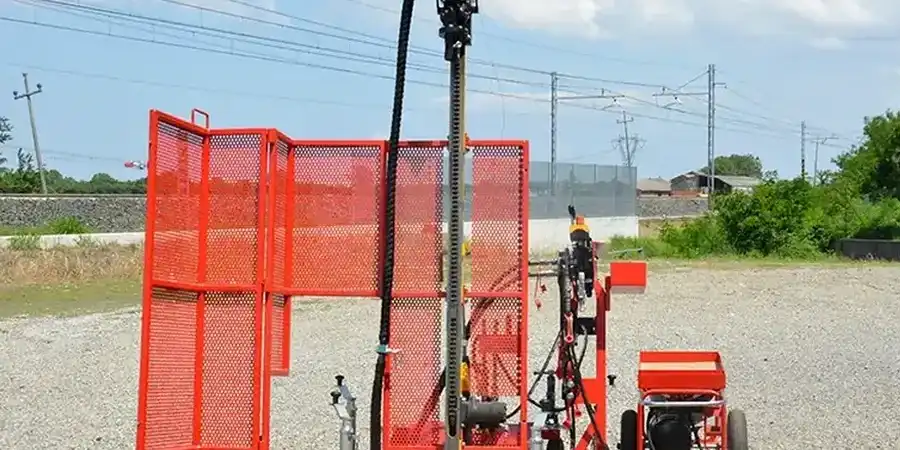
Site-specific factors
In Tulsa County, we've seen too many projects where shallow borings terminated at 15 feet without penetrating the fill layer that extends to 22 feet in former industrial corridors east of downtown. An SPT program that stops short of competent material produces N-values that misrepresent the actual bearing stratum, leading to differential settlement that shows up within the first two wet-dry cycles on Tulsa's expansive clay. The corrected SPT N-value is sensitive to hammer energy—if the automatic trip hammer hasn't been calibrated in the last 12 months, the reported blow counts can be off by 20 percent or more. When those uncorrected values feed into a liquefaction analysis for a site near the Arkansas River, the factor of safety against triggering may be unconservative. Another risk specific to Tulsa's geology: refusal on sandstone float blocks that sit above softer shale, creating a false impression of bedrock competence. Without extending the boring through the float and into the underlying formation, the foundation design assumes bearing on rock when it's really bearing on a boulder suspended in residual soil.
Regulatory framework
ASTM D1586-18 — Standard Test Method for Standard Penetration Test (SPT) and Split-Barrel Sampling of Soils, ASTM D2487-17 — Standard Practice for Classification of Soils for Engineering Purposes (Unified Soil Classification System), ASTM D4633-16 — Standard Test Method for Energy Measurement for Dynamic Penetrometers, ASCE 7-22 — Minimum Design Loads and Associated Criteria for Buildings and Other Structures (Seismic provisions), IBC 2024 — International Building Code (Chapter 18: Soils and Foundations)
Related services
SPT with Mud Rotary Drilling
For deep borings exceeding 60 feet in Tulsa's Arkansas River corridor, mud rotary methods maintain borehole stability through loose sands and gravels while delivering continuous SPT samples at 2.5-foot intervals. Includes energy-calibrated hammer and real-time N-value logging.
Combined SPT and Rock Coring
When SPT refusal occurs on sandstone or limestone, we transition to NQ wireline coring to recover intact rock samples. This paired approach maps the soil-rock interface precisely—critical for drilled shaft design in downtown Tulsa.
Liquefaction Screening Package
SPT-based liquefaction assessment per ASCE 7 and Seed & Idriss methodology, including fines content from split-spoon samples, cyclic stress ratio calculations, and post-liquefaction settlement estimates for sites in the Arkansas River floodplain.
Typical parameters
Common questions
What's the typical cost range for an SPT boring program in Tulsa?
For a standard SPT boring to 30 feet with hollow-stem auger drilling in Tulsa, you can expect to invest between US$510 and US$650 per boring, depending on access conditions, traffic control requirements, and whether rock coring is needed below refusal depth. A typical residential or light commercial project with three borings runs in that range per hole. Mobilization, laboratory classification testing, and the geotechnical report with bearing capacity recommendations are additional line items. We provide a fixed-price proposal after reviewing the site location and proposed structure loads.
How deep should SPT borings go for a building foundation in Tulsa?
Per IBC Section 1803, borings must extend through all unsuitable material and into competent bearing strata. In Tulsa, that typically means 20 to 30 feet for shallow foundations on the east side where sandstone is shallow, but 40 to 60 feet in the Arkansas River alluvium where loose sands and soft clays persist. For deep foundations, borings should extend at least 10 to 20 feet below the anticipated pile tip elevation. We determine the final depth in the field based on SPT refusal criteria and the structural loading, adjusting boring depth as stratigraphy dictates.
How do you correct SPT N-values for overburden pressure and hammer energy?
Raw SPT N-values are corrected using the standard factors in ASTM D1586 and Seed's overburden correction: N60 = N_field x (ER/60) x CB x CR x CS, where ER is the measured hammer energy ratio from our last calibration, CB is the borehole diameter correction, CR corrects for rod length, and CS accounts for sampler type. Overburden correction (CN) follows Liao & Whitman's method, capping at 1.7 for shallow depths. We report both raw and corrected N60 values on every boring log so the structural engineer can apply project-specific correlations for bearing capacity and settlement.